Monday, June 08, 2020

Fit for 50: 3 rules for a healthier lifestyle

In something of a departure from my usual posts (which, admittedly, have been few and far between of late) this post is the story of my weight loss journey. I wanted to share with others how I've not only lost weight but kept it off, in the hope that it may help others to do the same. I've managed to go from being an obese man pushing 100kg in his forties to a fit and trim fifty year old; I now weigh in at around 80kg with a body fat percentage of 22%.

Let's be clear, I've no wonder solution to offer: I never used any diets, no pills, and I never gave up the things I enjoy most. But I can share how I did it in three simple rules:

Rule 1: Realise that what you're doing now is the problem - change your habits

Rule 2: Know what's going in and out - count everything

Rule 3: Stimulate your metabolism - be active
But first a little background.


Before and after

Dawning Realisation

I remember it well when I first realised I'd lost control of my weight. It was after one of our traditional family gatherings, and the pictures started coming in that people had taken during the day. There was one of me and my immediate family group, and staring at myself in that group photo I suddenly realised I'd got enormous.

I had stopped weighing myself years ago, and didn't even have any bathroom scales in the house anymore, but you didn't need scales to see that I was in trouble. The sheer quantity of fat around my face was enough to give the game away. Sure, I'd been buying bigger and bigger trousers over the years, but those changes in waistline are so gradual it's easy to shrug them off, and a with a clever bit of dressing you can convince yourself that you're still in pretty good shape. But that face, there was no mistaking the extra fat around the jawline, and the fact that all of a sudden there were little piggy eyes staring back at me.

I realised that something needed to be done, and had heard a lot about this new Fitbit thing that was doing the rounds. I decided to try and get a handle on my weight, and bought into the tech big time with a brand new Fitbit One and a set of Fitbit Aria scales. Sure enough, the scales confirmed what I guess was already apparent to everyone else - according to all the best metrics I was not just overweight, technically speaking I was obese.

Three steps to a fitter you

Rule 1: Change your habits

This is unquestionably the most important thing you need to do, but, as ever, probably the hardest as well. It's also the number one reason why every diet will fail you, no question. Why? Because any diet, trendy or old, is a temporary change in behaviour patterns. The clues in the name, it's not something you actually do forever, it's just something you do briefly in order to try and lose weight. The moment you stop, bingo, you get heavy again.

What I did was look at my lifestyle as it was, read a lot about nutrition, health and weight gain/loss, and come to the inevitable conclusion that the way I was living my life was what was making me fat in the first place. If I really wanted to lose weight, and
chocolate bars
keep it off, how I was living would have to change. Having a chocolate bar every day after my sandwich for lunch, for example, was not going to be an option any more. I was treating them like an everyday part of my diet, rather than a treat to have once a month. Serving great big piles of carbs so I felt full every meal, again not exactly a sustainable part of my life if I was going to lose weight. These things had to change.

So what's the plan now? These days I always make sure that I only have one 'proper' meal in the day, i.e. one large meal (usually in the evening) and snacking is kept to an absolute minimum. I've never really eaten breakfast, that old adage about it being the most important meal of the day is questionable at best, and possibly downright misleading. For the other meal it's invariably a bowl of soup in the winter (without bread), or a salad in the summer (usually with some good quality protein), low-calorie healthy options which can help you feel sated and therefore get through the day as productively as you want to.

The trick is to become aware of what you're eating, spot the unhealthy stuff and the unnecessary extras, and shift your mindset so that you no longer even want the food that used to be your everyday diet.

Rule 2: Count everything

This is where the Fitbit comes in (or, for that matter, whatever other device / app you prefer). When I first started my weight loss journey I didn't really have a clue about calories, or how much exercise I was getting, how heavy I should be, or what a good fat percentage was. That chocolate bar I was having for lunch every day? At least 250 kcals, which is 10% of my daily allowance disappearing in just a minute or so, calories I really didn't need. These days that has been swapped for a couple of really good dark chocolate buttons, a tenth of the calories, probably even tastier if I'm honest, and cheaper too at that!

Fitbit One
I don't like the term calorie counter, and I certainly don't count calories like I used to, but for one entire year I counted every single thing I ate and drank and entered into my little Fitbit app so that I had a crystal clear picture of how much I was consuming. If I wanted a glass of wine, for example, it was carefully measured and logged in my app. Now and then I might have gone down the pub with friends and had a couple more than normal, but it was all logged nonetheless. I also started weighing food in my everyday meals, pasta and rice in particular. I realised that I'd gotten into the habit of simply cooking loads of carbohydrates for every meal, and then gorging on them regardless of whether or not I needed them. I love my pasta and rice, like many do, but they do pack an inordinate amount of calories. I learnt tonnes about the balance of nutrients in so many foodstuffs, and slowly started to adjust how much was going into my body. I also realised that sugar really was the bane of my weight loss plan. I really had no idea quite how many calories were in sugar, or how much I had been eating, until I started recording everything. Together with the carbohydrates, they were contributing so many excess calories to my diet - they had to go.

The other thing I counted, and for that matter still do, was my weight. Every single morning I weigh myself and log it, and now have a record going back many years of not only my weight but also my body fat percentage. I've learned that it fluctuates, even though (as recommended) I always weigh myself at the same time of day, but what matters is the overall trend over time. Keeping a log of weight in this way allows me to spot when I'm slipping, as happens now and then, but because I've changed habits I can get a hold of things quickly before my weight starts to spiral upwards. Also, there's nothing quite as satisfying as being able to see your weight fall! The original Fitbit Aria scales I bought, which transferred the weight data to my app wirelessly, eventually died on me, but a much cheaper set I bought to replace them are just as good, if not better, and typing in the weight rather than it transferring automatically is hardly a chore!

Rule 3: Be active

It may seem obvious, everyone knows you need to do more exercise in order to lose weight, don't they? But perhaps the message here I want to make is the nature of that exercise. I've said this rule is about being active, not necessarily going for a run every day or buying a gym membership. The way I did it was simply to walk every day - free, simple and healthy. I picked up on the 10,000 steps thing, and made sure that I did my 10,000 steps pretty much every single day for a year without fail (there's that Fitbit One coming in helpfully again, counting steps this time). And do you know what? It actually works.

feet walking
There are lots of naysayers out there who claim the 10,000 number is just a made-up figure (and in actual fact, it is), but that doesn't necessarily mean it doesn't work. Combined with rule 1 and 2 this is all you need to lose a drastic amount of weight and start feeling good about your body again.

It's now 5 years since I reached my original goal, and although my weight still goes up and down I keep to my rules and as a consequence, I'm still a healthy weight. In fact, I've now started weight training in order to get stronger, as the evidence suggests that men who maintain muscle as they get older will live longer. Now that I'm fifty, with more of my life behind me than in front, I kind of want to get as much out of what is left as possible!

But I'll leave the weight training for another blog post ...

So, to summarise, you just need to do three things if you want to lose weight - and keep it off. Realise what you're doing now is making you fat, count what you eat, how much you move and how much you weigh, and get out of the house - and walk!

Monday, October 10, 2016

Zuppa alla Bolognese

I started to make soups for lunch as part of a long term plan to lose weight, but really missed some of my old favourites like a big plate of spaghetti bolognese. I decided to invent soups that tried to recreate classic dishes I used to enjoy (my Cottage Pie soup’s not bad either), but with far fewer calories - and this is my favourite!


My partner is Italian, and I’ve honed my own bolognese style sauce - or ragu - over many years, mostly by watching her mother make it back home in the Italian mountains. This soup captures all the flavour of that sauce, but takes out most of the calories as there’s very little pasta. It’s also healthy and low fat as well. I tend to make it from leftover roast beef from a Sunday joint, so it’s thrifty too. Enjoy!

UPDATE: I've added four videos which show this recipe as well now, available on my YouTube channel:
https://www.youtube.com/playlist?list=PL6aNdpB0GYFlEtDpfTmNdRa1uyje6gjpv

Method

  1. First chop your celery, carrot and onions (the classic Italian soffritto) into 1cm cubes, and fry gently in a tablespoon or so of olive oil for about 10 minutes until they’ve just taken on a little colour.
  2. Next add the same amount of leftover roast beef cubes as you have vegetables, again cut into 1cm cubes.
  3. Add beef (or other meat) stock to cover the vegetables and meat and give a good chunky texture.
  4. Add a tablespoon or so of tomato puree (depending how much veg and meat you’ve used), to give colour and flavour.
  5. Chop up some fresh herbs and stir in. I usually use rosemary, oregano and thyme - I like it quite herby!
  6. Add a couple of inches of leftover parmesan crust.
  7. Simmer for at least 30 minutes, until the veg is tender and the parmesan has infused.
  8. For the last 5 minutes or so of cooking, sprinkle in a good handful or two (again depending how much of the other ingredients you’ve used) of small pasta shapes, e.g. farfalline (little bows). Check the cooking instructions for whichever you’ve used for the right timing.
  9. Top with a little extra grated parmesan if you wish - and enjoy!

Sunday, June 08, 2014

Slow Roast Lamb with Honey, Lemon & Thyme

Almost two years now since I wrote here last, seems such a shame. In my defence, becoming a new father and trying to finish a PhD at the same time doesn't leave me with much time for writing about food, but I do still cook! Here's a quick sample, using Google Stories to do some of the leg work for me ...

https://plus.google.com/117478890230640167662/stories/02b0c635-0549-3d50-9b2e-58e5820297c0/1?authkey

I'll be back to blogging just as soon as I've got this bleeding doctorate out of the way!

Sunday, June 17, 2012

Slow roast parchment wrapped shoulder of lamb with honey, lemon & thyme

Honey. What a delicious and wonderfully sustainable resource, not to mention natural and chock full of good stuff for the body. But anyone who has tried to roast with it will be well aware of the big down side of any ingredient that is so rich in sugar - burning. Nothing can be quite so depressing as to open the oven and find that your juicy succulent roast, which was supposed to be full of fragrant and subtle flavours, has been pockmarked by acrid black spots which means that even if the roast is salvageable, your gravy surely won't be.

Of course the obvious answer to this malady is just don't use honey or similar in the first place, but I love the stuff, and it's a natural partner for many meats. So the next step is to find a method that somehow keeps the rich flavours but avoids the burning - which is where the parchment wrapping comes in. Sealing meat in some form of protective wrapping is a long revered tradition, whether it's really old school such as wrapping in an (inedible) pastry, or more contemporary such as the latest sous vide techniques. Either way, you need to find a way of keeping the ingredients that have a tendency to burn, away from the direct heat of the oven.

I've done a few parchment wraps so far, mostly lamb, but this is the first that included honey. Lamb is already a sweet meat, but there's something special about the combination of lamb and honey. Thyme again is a natural accompaniment, and at this time of year it's really at its best, with long tender new growth full of flavour. Lemon I feel is often a good idea with fat and strong meat such as lamb, as it cuts through that richness, and also marries very well with the other two ingredients.

This is also a slow roast, as I believe this is the best way to treat a shoulder of lamb, as it breaks down any tough meat into meltingly tender strips, and the natural fattiness of the lamb ensures that it remains juicy even after hours of cooking. It also means that although I have to spend a little time at the very beginning of the day preparing the meat, I have the rest of the morning to myself to do other things, in this case wandering through the Exe Valley watching trains and paddling in the river Exe with my family. Lots of fun :-)

The Recipe

The first step with this is to blend together them ingredient to coat the shoulder of lamb. This should be a whole shoulder on the bone, though off the bone should work fine too. Take 2 tablespoons or so of honey, the same of chopped thyme, and blend with half a lemon - both rind and juice. Add a teaspoon of salt (flaky sea in my case) and pepper to taste if you like it - I didn't in this case.


The coating for the meat - honey, lemon, thyme and salt

Line a roasting dish with some baking parchment ready to fold, and place the meat on it. Now pour the mix over the meat and ensure it's well covered. Don't worry about the underside, it'll all come out in the wash!


The meat covered in the mix

Now wrap up the meat securely in parchment, using several layers to ensure all the juices stay in. I did mine several layers one way, ands then added another load of baking parchment 90° to the first lot.


The meat wrapped up ready for the oven

Now bake this in the oven for four hours at 150°C (fan). You should end up with something like this.


The finished dish

I poured some of the juices out of the wrap at this stage so I could then reheat them and serve with the meat on the table, as the meat was going to rest for half an hour and I wanted to bring some heat back to the dish.

It's a light summer way of preparing a large piece of lamb like this, and comes our very tender. I did get a little blackening in the pan itself where some juices had managed to leak out, so I could have perhaps sealed the parchment more, but on the whole this is a very effective way of using honey in a long slow roast and being able to retain flavour without burning. Served this with potatoes and carrots, as that's what I had to hand, but honestly I think it would be much better accompanied by bread and salad.

One curious point to finish on, even though this was sealed throughout the cooking, you'll notice that there is still some blackening inside the wrapping. Where this had cooked the thyme, honey and lemon glaze the result was outstanding, creating crispy biscuits of herb flavoured honeyed lamb skin. An expected benefit!

You can see the whole album for Slow roast parchment wrapped shoulder of lamb with honey, lemon & thyme on my Google+ profile if you're interested.

Monday, August 08, 2011

Focaccia

Thought I'd write a quick post about the joys of Focaccia, which is an Italian flat bread for those of you not familiar with it. I first tasted Focaccia when I was an exchange student at the Italian University of Padova, and have loved it ever since. It has a light yet doughy texture, with a subtle chew, and is very often cooked with crusty salt and herbs - my favourite way of preparing it.

Two shallow Focaccia ready to go in the oven
The best thing about Focaccia as far as I'm concerned is that it can be prepared so easily - that is if you have a bread machine at least. Not that I bake bread in a bread machine, that really wouldn't be possible with Focaccia. It's the kneading and rising side of things that I use it for. Some people love to knead I know, they see it as a source of relaxation, but to me it's simply a pain in the hands!

My bread machine is an old Panasonic model, well over ten years of service but never misses a beat. It has a good selection of different settings, but only one is much used in my household, 'Pizza'. This is only a 45 minute cycle, but provided you give your dough a good hour or two once the bread machine cycle has run then, it works well for a whole range of different Italian style flat breads, not least of which is Focaccia.

Here's the recipe I use. This amount will do for a large lasagne style deep dish, or for two regular flan dishes as shown in the pictures.
  • 1 tsp dried yeast
  • 450g Bread Flour
  • 1½ tsp salt
  • 2 tsp sugar
  • 275ml water
  • 2 tbsp olive oil (plus extra for coating the pan and for drizzling)
The method is quite simple:
  1. Empty the yeast into the bottom of the bread machine bucket, add the flour on top, then sprinkle with the salt and the sugar, pour on the water, and finally add the olive oil.
  2. Let the machine run the Pizza cycle or similar, then leave the dough undisturbed for an hour or so.
  3. After the hour is up, pour a generous amount of olive oil into a deep baking dish and empty the dough out into it. Turn the dough in the olive oil to coat it, knocking it back and pushing firmly into all the corners so that it fits the rectangle. Leave for another hour or so somewhere warm, covered in a tea towel.
  4. After the second hour is up your dough should be quite risen. Now push your finger deep down into the dough, but not quite to the bottom, to make the characteristic holes. Scatter generously with rosemary leaves and sea salt, and drizzle with more olive oil.
  5. Bake in a pre-heated oven at 200ÂșC for 15-20 minutes until as brown as you prefer.
  6. Leave to cool briefly, for as long as you can resist that gorgeous, soft, herby and salty delight ...
Topping and other flavours can be added according to season and taste, this year my wild garlic with caramelised lemon zest worked particularly well.

Wild garlic and caramelised lemon zest at the front, plain wild garlic at the back.

If you'd like to see more pictures of my Focaccia's being prepared, head over to my Focaccia pictures in Picasa Web Albums.

Thursday, March 17, 2011

"Red Devil" Cheese Scone Noses: A Comic Relief Special

Way back in 1988 a new institution was born in this country - Comic Relief. I was back in School back then, but I remember it quite distinctly, as a friend and I (Ben Clover I seem to remember) had been given special dispensation to stay up late and watch the live broadcast on the TV, in the sixth form common room. Powered only by a variety of hot drinks, plenty of toast, and an army of assorted spreads, we made it through right to the end of transmission. I can't for the life of me remember much about the broadcast, except for the strong sense that things were amiss in large chunks of Africa, and that Lenny Henry wasn't entirely sure what was going on for most of the programme, but at least I can say I was there.

Fast forward to 2011 and Comic Relief it still with us, and as fab as ever. Tomorrow is comic relief day, and for once I decided to cook in honour of it, and something a bit unusual to boot. A spicy - and very red - variation on my Mum's cheese scones.

Red Devil Cheese Scone Noses
Now my Mum's cheese scones are - of course - the best cheese scones on the planet. Aren't all Mum's cheese scones? I make them myself quite often, they're a particularly brilliant way of using up milk and cheese which has started to lose its lustre, shall we say. I've even done variations, my Brie & Lemon Balm Scones the most successful so far. But tonight I thought I'd push the boat out, and try something a bit ... well ... odd.

The most long running theme of Comic Relief has to be the red nose, and in fact the whole enterprise is often referred to as Red Nose Day - or RND as it's now cropping up on Twitter. So what, I figured about Red Nose Scones? But not just plain old red noses, but spicy, hot, cheesy red noses. To the kitchen! Actually, I had no way of making any any red food at all at this point, bar adding vast quantities of tomato puree, but luckily my neighbour Angela was happy to share some food colouring that she had spare, so I was in business.

But back to the recipe. Really simple, First here's the cheese scone recipe, sans Comic Reliefness ...

"Red Devil" Cheese Scone Noses

by , March 17th, 2011

A spicey twist on a classic cheese scone recipe, perfect for comedy events. Should take about or so to prepare, , so .

Ingredients
  • 450g plain flour
  • ½ teaspoon salt
  • 3 teaspoons of baking powder
  • 1 teaspoon mustard powder
  • 200g strong cheddar cheese, grated
  • 100g butter, thickly diced
  • milk to mix, up to ½ pint
Now that will make you fab cheese scones, which need to be shaped and baked in the usual way. I have a trick (actually, my Mum has a trick) with the preparation of the dough too, but that'll have to wait till another time. The processor took a nasty slice off my finger, so my typing's a bit slow tonight ...

To make my RND Red Devils you just need to make the following additions:
  • 4 teaspoons of red food colouring (Less than four might well work, but I had four, so I used four. They do need to be REALLY red, after all)
  • ½ teaspoon cayenne pepper
  • 1 dash hot sauce, e.g. tabasco or similar
  • 1 tablespoon of tomato puree
Method

Mix all the dry ingredients in a food processor, then add the butter and process briefly. Add the cheese, process briefly again and then add the food coluring, the hot sauce and the tomato puree. Then start to add the milk with the machine running until the mixture forms a firm ball inside the machine.

Shape into walnut shaped balls and bake in a fan oven at 180° for 15 minutes.
Cool on a wire rack.

What you should end up with is something like this:

Front lot ready for the oven, back lot are baked already and now cooling
With the quantities from the recipe above you should end up with at least 30 red devil noses, hopefully more. Personally I got 35 out of it (it may have been 36 actually - I've lost track of how many I've eaten already).

I think they would be fab split in half whilst still warm, and served with cold butter, especially a chive or garlic butter, but they need to go to work tomorrow to join the other baked goods being sold to raise money for charity. Of course everyone else will be producing sweet cakes and the like, so chances are my little red devils might be coming home again with me - but then again you never know. They are damn tasty, and on comic relief day anything might happen ....

Saturday, January 08, 2011

Brasato di Cervo (Braised Venison)

Well that's Christmas over for another year, and for the first time in many years we've not been able to get to Italy to see the other side of the family and celebrate with them. There's a very good reason we've not been keen to travel far, the arrival of our Son, Max, but that doesn't mean we're not disappointed and feeling a bit low about it. The Italian trip has become something of an institution and it feels like something is missing somehow.

Luckily Nonna did manage to visit before Christmas and meet her grandson briefly in December, and she also brought practically an entire suitcase full of food for us, mostly local from the region. I swear she thinks I starve her daughter back here in England, and the food here is desperately in need of some hearty Italian additions! I have to admit I struggle to disagree given what she brought, the small crunchy breads called Bibanesi for example which I love and can't find in this country. There's also the wonderful Cotechino, a form of pork sausage that's probably quite bad for you but tastes delicious, especially when served with puy lentils cooked with vegetables and butter. There's also the truly local food, venison shot in the Italian alps by the Italians father or one of his friends - it's never entirely clear who shot what it seems. This time around we had mince and something labelled "Rosbeaf Cervo", which I think was some sort of topside joint. Either way I decided to do it in Nonna's style, something I've had many times when visiting the in-laws, a braised dish with root vegetables and wine.

Brasato di Cervo

The trouble with wild food is that you're never entirely sure what you're getting. Farmed food has the reliability of mass production at least, if not the flavour of wild, but it does mean that when a cut ends up on your kitchen sideboard you can't be 100% sure how best to cook it. Braising is something of a fallback in this respect, as there are very few cuts that won't be delicious after slow cooking in a moist flavour rich environment. This dish is something I've seen made a lot in Italy by the Italians mother as well, so I did have something of a head start on it, plus a handy recipe check just a phone call away.

The meat as it arrived - just what is this?!
Nonna is actually a fabulous cook, but in that home style way that is so often overlooked. She cooks simple food incredibly well, something which perhaps could be said is a hallmark of all great Italian cuisine, but something that can be tricky to replicate back home. I find the tendency is to overdo the frippary and miss  the more basic - but critical - aspects of the cooking, which is why proper Italian food is so hard to find outside of Italy. By that I mean the underlying aspects such as how long to cook each part of the recipe, and the correct quantities of each of the ingredients.

This brasato recipe is a case in point, deceptively simple, easy to make, but hard to master. You start with a quick sofritto, then spend some time browning the meat exceptionally well, next deglaze with white wine and then very slow cook until tender.

Step 1: Sofritto

Sofritto is the Italian word for what the French call a mirepoix, a combination of onion, carrot and celery chopped into small dice that is slowly fried in oil or butter to form the base of other dishes. Here is is used as the base flavour for the braise, and also as the sauce used to dress some pasta for the primo.

Often when I cook onions I prefer to do them long and slow, creating an underlying sweetness and mellow onion flavour, but seeing as this is a slow braise anyway there's not so much need. One thing that is important though is to add the ingredients one by one, not all together. This means you can more accurately judge different lengths of cooking for different vegetables, and also that you won't overload the pan cooling it down. The golden rule is:
  • Onion first, 5 minutes or do
  • Carrots next, another 5 minutes or maybe a few more
  • Celerey, for just 3 minutes or even less
Now I should be using celery here, but a trick I've used a few times in the past is to swap this for celeriac leaves instead. I first started to do this as I had some celeriac leaves left over and didn't want to throw them away, but have found that they flavour just as well as celery and in some ways add more interesting notes and texture to a dish. I love the way the leaves end up as speckled flecks of green through the sauce.

Onions in first
Then the carrots after 5 minutes
Next some rosemary and bay
Now for the roughly chopped celeriac leaves
The finished sofritto
I also used a little garlic in this recipe, sliced thickly and added after the celeriac leaves. No need to cook it out, it will soften and flavour the sauce in the long slow braising. There's also some rosemary and bay, but you can add whatever herbs you like really or have available. I wouldn't bother adding dried though, there won't be much flavour left from them by the end.

Thickly sliced garlic
Step 2: Frying the Meat

Once the vegetables have been cooked till just softening it's the meat's turn. Simply turn the sofritto out into a dish on the side, and a little more oil into your pan and then get the meat frying.

Sofritto left on the side. Doesn't matter if it cools down a little, it'll soon be hot again.
Meat is often browned before cooking, and this was once thought to 'seal the meat', keeping it juicy by creating a crust on the outside that keeps moisture in. It's now pretty well known though that this simply isn't true, moisture can escape just as easily from browned meat, what keeps it moist is the cooking technique. What browning does do though is create the Maillard reaction, that wonderful rich dark brown colour imparts all sorts of delicious flavours to the dish.

As usual in many recipes the meat is first tossed in seasoned flour, which will act as a thickener for the sauce. Unusually though the meat is browned for a very long time, 15 minutes or longer. This is something that I've learned from Nonna, and is an absolutely critical part of this dish. It imparts such a deep an rich flavour to the finished brasato it has to be tasted to be be believed!

The meat tossed in seasoned flour
The very well browned meat
The wine has just been added, but the pan not yet deglazed.
Sofritto and meat together, ready for braising.

Once the meat has had it's 15-20 minute browning, delgaze with a generous glass of white wine, and then add the sofritto back in and it's ready for the long slow braise.

Interesting point here - the addition of white wine rather than red wine is another hall mark of Italian cooking that I've discovered. More often than not I'd have used red wine before I met the Italian, but have since learned that it is much more usual to use white wine even in red meat dishes, and I think it does produce a finer result.

Step 3: The long slow braise

Finally, time to do nothing! All you need do now is get the meat on a very slow heat, cover it and leave it alone. When I say very slow, you should be able to see the odd bubble coming up from the bottom of the dish but nothing more than that. The very worst thing you can do to a braise is cook it fast, nothing will toughen meat up quicker. As for timing, you should be aiming for at least 2 hours for a piece this size I would say, longer for larger. If it starts to dry out at all just add a tablespoon or two of water.

The finished dish, a couple of hours later.
Serving: Primo and Secondo

Back home in Italy this would probably be served in the traditional way, primo first then secondo, with the same dish providing the sauce for both. Pasta and rice are usually only served as a 'primo' course, not as a main, with meat and vegetables or salad as a 'secondo' course. A braise like this is perfect as you have a sauce for both.

First take out the meat and leave it to rest as usual - this will help the meat to become even more tender as it relaxes. For this dish I then blitzed some of the sauce in a food processor to make a smoother sauce for some fresh pasta, keeping about half the sauce in the pan with the resting meat.

Sauce on the left for meat, water boiling for pasta, and blitzed pasta sauce warming.
Fresh egg tagliatelle. Hand cut rather than machine cut this time, so a bit rough!
Fresh pasta like this really only needs a minute or so cooking, depending how thinly you've rolled it. I served the braise with some dauphinois potatoes left over from New Year's Eve's dish, so pretty easy food all in.

The primo, fresh egg tagliatelle with the sauce slightly blitzed.
Secondo, slices of braised meat and dauphinois, dressed with the braising sauce.
Hopefully this dish doesn't look too complex, and I hope you'll find time to try it. The flavours really are wonderful, and of course you get leftovers so you only have to cook it once and you can get several meals out of it.

P.S. There's a full library of images from this dish on my Picasa Web Album, Brasato di Cervo. This also includes pictures of making beef, red wine and wild mushroom ravioli - more left overs from New Year. When making pasta it's always a good idea to make a fair bit as you can either freeze it or dry it for another time. Making ravioli like this is a great way of using up leftovers too.

Friday, November 26, 2010

Shoulder of Pork with Quince & Chilli

Quick note to regular readers: I've not written for a while since my son Max was born a few weeks ago. Whilst I've still been cooking,  I've not had quite as much time to write about it as I'd like to!

Quinces on the tree
I guess I've always been a seasonal cook, and whilst that means you get the pros of having the very best produce to cook with, it also means that you have to cope with various gluts of products now and then through the year. Right now if there's one thing I tend to have a lot of it's quince, a wonderfully fragrant hard fruit that needs to be cooked before eating. I bought my particular tree, a Quince Vranja, many years ago now, and although it's never grown particularly large it does crop very well, with prolific large, heavy golden pear shaped fruits. They have the most wonderful perfume to them, though they can go brown and decay quite quickly if you don't use them quick once they've fallen from the tree. For that reason I never tend to pick them, just take them as they fall.

Cooking wise quince is most often paired up with apple, added to fruit pies and sauces, and adds interesting notes of flavour and texture. I've also made jams and jellies with it, various interesting desserts, as well as the famous quince cheese - an odd concoction, but certainly tasty. Kind of like home made jelly sweets, though more often paired with cheese. This time around though I wanted to try something roast'ish, but had already bought a good looking shoulder of pork for Sunday. Luckily I came across an interesting looking recipe from Sophie Grigson on the BBC's website, Slow-roast shoulder of pork with quinces served with savoy cabbage and roasted potato wedges.

I was a bit suspect of the recipe to start with, thinking that it might turn out too sweet with tough pork and soft crackling, but knowing what an experienced cook Sophie is it hardly seemed my place to question her, so I pretty much went along with it. My main differences were:

  • Shoulder on the bone, not rolled
  • Normal onions, not red
  • Dark muscavado sugar, not light

I also didn't bother greasing the dish before hand, and decided to cut my quince and onions into chunks rather than slices. Here's a picture of my ingredients before preparation:

All the ingredients before preparation
And two pictures before going in the oven, one without the dressing and one with:

Ingredients ready for the next stage

Ingredients with 'dressing'
You'll notice I'm using a Dutch Oven here, or what I call my French Roaster. Oddly enough it's something I picked up that was discarded by someone else, and it's been a gem in my collection ever since. It's ridged bottom together with the dimples in the lid mean it can cook wonderful pot roasts and self-baste at the same time.

As Sophie suggested I did this with potato wedges and cabbage. I have a neat (lazy!) trick with potato wedges, that means I can cook them from cold. Once the dried potato wedges have been tossed in cold seasoned olive oil I arrange them on the roasting pan making sure that they're all skin side down. I then put them in a hot oven (200° or so) and make sure I don't touch then for at least half an hour - this stops them from sticking to the pan, avoiding that horrible moment when you go to toss your potato and the skin sticks to the pan whilst the rest of the potato just breaks away!

Potato wedges - all skin side down!
And the result? Well the flavour was outstanding. The quince was in no way too sweet, and the chilli was a revelation. Great combination. Knowing how well quince and apple go together I guess I shouldn't have been surprised that quince would also be a good match! The crackling was too soft, but I have another trick to deal with that. If this happens to me I simply take the crackling off the meat, put the meat to rest somewhere warm as usual, and then pop the crackling back into a hot oven on a new roasting tray for 20 minutes or so as the meat rests. That usually does the trick. The meat was pretty tender considering it had been roasted rather quickly - shoulder would usually be done cooler for longer. But it was in no way too tough. Perhaps that's also a mark of the quality of the meat - a saddleback from Oakcroft Farm, bought at Cullompton farmers market. As I've said before in my Top Roasting Tips, the quality of your meat is more important than pretty much anything else in my opinion.

The roast out of the oven. Looks a little 'caramelised' on the edges perhaps (i.e. burnt :-) but there was no bitterness at all

Sliced meat ready for serving. Lovely and tender.
Finished dish
All in all I can definitely say this is a dish I think I'll be doing again, though perhaps with one or two more tweaks.

P.S. It also went on to make a great sweet & sour pork dish later in the week with almost no more effort, so two dishes in one here!

Sunday, September 12, 2010

Wild Mushroom Foraging: How to tell Real Chanterelle from Fake Chanterelle

Well mushroom season is back again, finally, and we had our first outing yesterday. I'd heard from others that it was a good season already, and sure enough we weren't disappointed - sometimes we go looking and come back empty handed, but this time around I'm happy to say that we got a pretty good haul.

Boletes & Chanterelles
I've been foraging for wild mushrooms for years now, and have slowly built my skills so that I can identify mushrooms correctly. I still find it tricky to tell the difference sometimes though, I have to say, and usually find myself poring through my mushroom books once home just to make sure. Roger Phillips's "Mushrooms" (he has a website too at http://www.rogersmushrooms.com/) is my key tome, as it is for many others, but I also have several others from people like Carluccio. I actually keep the Phillips book in the back of the car with my mushroom knife - you never know when you might find something tasty!

How to Start Identifying Mushrooms

Learning how to identify mushrooms takes time above everything else, partly of course because mushrooms are seasonal, so you only have a few months in which to practice. I think there are two great pieces of advice I would pass on to any budding mushroom hunter:

  • First, get to know the major poisonous mushrooms before you know any others. There are actually quite a small group of common dangerous mushrooms, e.g. Death Cap, Panther Cap, Destroying Angel. Once you get your eye in and know what to look for it's relatively simple to spot them, and you can then be comfortable that you're protected from at least those deadly mushrooms that really will kill you.
  • Second, pick a small group (i.e. genera) of mushrooms and focus on that, so you can comfortably identity mushrooms within just that group. Once you start learning more about mushrooms you soon realise that there are many, many different structures within them that set them apart from each other, so mushrooms that previously seemed exactly alike will suddenly be quite obviously different. You learn that even things like size can be quite specific, sometimes it's possible to rule out a certain species based on size alone.

Identifying Real Chanterelle versus Fake Chanterelle

When it comes to identifying mushrooms, one thing that has taken me years to feel truly confident about is telling the fake chanterelle (Hygrophoropsis Aurantiaca) from the real chanterelle (Cantharellus Cibarius). Many books and websites will tell you that it's quite easy to tell the difference between these two, but that's not been the case in my experience, so I thought I'd share here what I know just in case others have been equally as frustrated.

Chanterelle (or Girolle as they're also sometimes known) are of course one of the very best edible mushrooms - the Italian would probably say they are the best I reckon - and we're lucky enough to know a few local patches where they grow. Mushrooms of course grow in the same spot year in year out, provided you don't damage the underground root structures (i.e. mycelium) when harvesting, so once you've found a good spot it's worth keeping it under your hat! Trouble is fake chanterelles very often grow in the same locality, so chances are you'll probably encounter both.

I've read books that say you can identify which is which by colour, but they often seem very very similar. Others say you can by smell, but whilst true chanterelles smell of apricots, I've often found fake chanterelles can smell a bit fruity too. In blind tests I've always been able to spot one from the other if I have both, but given a single species I'm not so sure I could tell by smell alone. Another point of difference seems to be that the fake has a hollow stem, but the trouble is you could possibly find a true chanterelle with enough maggot damage (the mushroom hunters nemesis!) to confuse I reckon.

For me there is one absolutely unmistakeable difference between the true chanterelle and the fake chanterelle - the gills. A true chanterelle has primitive gills, a fake chanterelle has true gills.

Now the trouble with that statement of course, at least the trouble if you're not familiar with mushroom structure, is that the chanterelle is not a fish. Gills, from a mushrooms point of view, are what runs from the stem to the rim under the cap of the mushroom. On your normal supermarket mushroom they're usually white.

I'm not going to go on at length about them here, as this is actually a really complex subject, but it's hopefully enough to say that the diversity and structure of the gills is an absolutely key part of identifying mushrooms. Some mushrooms don't even have gills, but have other structures in their place. The wonderful hedgehog mushroom (which is delicious by the way) has spines for example, not gills at all, making it almost impossible to misidentify, as mushrooms which have spines are a very small group.

Chanterelles are unusual in that they have primitive gills, and that's exactly what it sounds like. Normal mushroom gills are thin and papery, well formed and uniform. Primitive gills are more like ridges on the surface of the mushroom underbody, they tend to be more haphazard and are an extension of the underbody itself, rather than a thin sheet of material protruding from it.

But enough words from me, I'm going to let my pictures finish this post. Below are a number of shots I took of two mushrooms, the first on the left is a true chanterelle that's destined for risotto. The second mushroom on the right is a fake chanterelle that's destined for the recycling bin. Hopefully the difference between their two gill structures is clear!


Update, August 2018

Just back from a lovely walk through the woods as the season slowly shifts from Summer to Autumn, and it looks like it's amazing season for one of these two - but unfortunately it's the false chanterelle! They absolutely carpet the ground in some spots, and to the casual eye look very much like chanterelles, but on closer inspection it's obvious they're not. I picked one particularly good specimen and shot a video back home which hopefully adds a little more detail about this gills business, check it out below, as well as a few more pictures.


Sunday, September 05, 2010

Food, Fashion & Fish: How being a bit different can save you a packet


I'm an avid collector of cook books, but not just any cook books. I tend to look for books which offer specific insights into a region or type of cooking, or older books which might have information which has been forgotten. You'll often find me in charity shops or second hand book shops rummaging amongst the shelves looking for hidden gems.

One of the last I picked up on one of these haunts was titled "Fishing for Food" by Trevor Housby. It was published in 1979 and sold then for the grand price of 99p. It cost me 50p, which I suppose isn't bad depreciation for something that's over 30 years old, though of course 99p would have bought you a fair bit more back in '79.


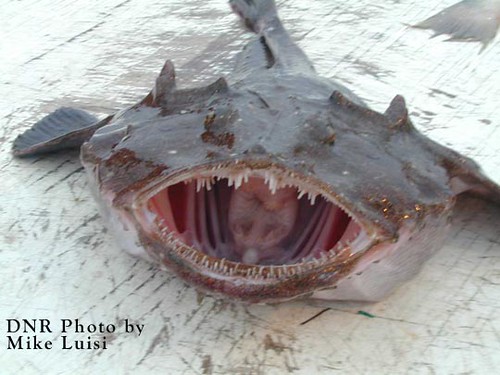
It's a fascinating book (well, more an extended pamphlet really) on all different types of fishing, whether from shore or boat, and also on lots of different types of fish and how good they are to eat. The usual suspects are there, bass for example is highly recommended, but I noticed as I skimmed through there was a section at the back for 'Odd Fish' and what should I find tucked in there but monkfish - and what it had to say there was quite surprising. It very clearly stated that "monkfish has very little value as food".

Monkfish? Not good eating?

Now I've enjoyed the odd bit of monkfish in the past, and have done the usual recipes that most cooks will have done, e.g. the roasted loin wrapped in ham, But to be honest I've never been able to justify the experience of eating monkfish with the price. It's an exorbitantly priced fish at the best of times, and when there is so much other great fish to choose to cook I can't stomach the (no pun intended!) extra cost - I just don't find I get the extra flavour that I expect with that extra cost.


On closer examination it seemed my new book was actually talking about a slightly different monkfish to the ones we usually consume - monkfish and angler fish are often called the same thing, and it's the angler fish which has the tasty tail, some other monkfish truly are not good as food. But it did spark me into thinking a bit more about food and fashion nonetheless, and specifically fish.

Last night was a case in point. I was at a local fishmonger looking for something for supper, and being the end of the day there wasn't much left. It was dabs, plaice, monkfish, dover sole or whiting. Now dover sole is marvellous stuff, no question, but very expensive too. I'm very fond of a bit of plaice though, and these were still stiff as a board they were so fresh - a great sign in fish. But it was the price that was most surprising. I could have bought some monkfish at £31 per kilo, but the plaice were selling at only £9 per kilo! No doubt in my mind what to buy, so I spent £5 on a couple of lovely fresh plaice which I then cooked up meuniere style with new potatoes and runner beans from the garden.


Plaice Meuniere


I guess many people are aware that fashion changes the price of food - it wasn't so long ago that oysters were food for the poor for example, and now they're served with champagne at specialist oyster bars. If you can move beyond the trendy food though you can save yourself a packet and still enjoy really great fish and other seafood.


Try something new, save yourself a packet


Plaice it seems is there right now, but if you're not keen on that there will always be things like dabs - fish too small and too plain to attract the interest of chefs. Another great fish that is often still cheap is Gurnard, an odd looking thing but with a wonderful flavour and a great texture too - much better than your monkfish I reckon, and at at least half the cost! My favourite way is cooking is whole and skinned with sage butter, wonderful stuff.


Gurnard pan fried whole with sage butter and lemon mash


Whatever fish you choose, just remember that something a little different might be more rewarding than you think, and be cheaper to boot. Diversity is the spice of life, so save some pennies and buy something different!


P.S. As an interesting aside, whilst researching for this post I came across this article talking about the rise of monkfish back in 1997. 
P.P.S. Another interesting aside perhaps, and a lesson to those who always trust the first website they read. Here are two articles on Gurnard. Apparently it's either got a stunning flavour and a good texture or is bland, depending who you believe :-) Personally I think I'll stick to believing my tastebuds, and they give it the thumbs up!
P.P.P.S. One final note then I'm done, honest. If you're looking for a good book on fish in general, and not only how to get your plaice into fillets but also to prepare a meuniere sauce, then look no further than Rick Stein's Seafood. Techniques and recipes for just about all the classic fish dishes you could want.

LinkWithin

Related Posts with Thumbnails