Sunday, September 05, 2010

Food, Fashion & Fish: How being a bit different can save you a packet


I'm an avid collector of cook books, but not just any cook books. I tend to look for books which offer specific insights into a region or type of cooking, or older books which might have information which has been forgotten. You'll often find me in charity shops or second hand book shops rummaging amongst the shelves looking for hidden gems.

One of the last I picked up on one of these haunts was titled "Fishing for Food" by Trevor Housby. It was published in 1979 and sold then for the grand price of 99p. It cost me 50p, which I suppose isn't bad depreciation for something that's over 30 years old, though of course 99p would have bought you a fair bit more back in '79.


It's a fascinating book (well, more an extended pamphlet really) on all different types of fishing, whether from shore or boat, and also on lots of different types of fish and how good they are to eat. The usual suspects are there, bass for example is highly recommended, but I noticed as I skimmed through there was a section at the back for 'Odd Fish' and what should I find tucked in there but monkfish - and what it had to say there was quite surprising. It very clearly stated that "monkfish has very little value as food".

Monkfish? Not good eating?
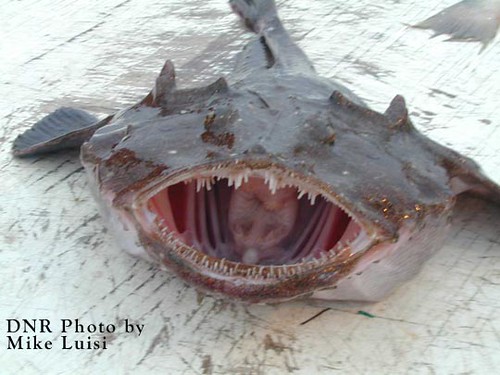
Now I've enjoyed the odd bit of monkfish in the past, and have done the usual recipes that most cooks will have done, e.g. the roasted loin wrapped in ham, But to be honest I've never been able to justify the experience of eating monkfish with the price. It's an exorbitantly priced fish at the best of times, and when there is so much other great fish to choose to cook I can't stomach the (no pun intended!) extra cost - I just don't find I get the extra flavour that I expect with that extra cost.


On closer examination it seemed my new book was actually talking about a slightly different monkfish to the ones we usually consume - monkfish and angler fish are often called the same thing, and it's the angler fish which has the tasty tail, some other monkfish truly are not good as food. But it did spark me into thinking a bit more about food and fashion nonetheless, and specifically fish.

Last night was a case in point. I was at a local fishmonger looking for something for supper, and being the end of the day there wasn't much left. It was dabs, plaice, monkfish, dover sole or whiting. Now dover sole is marvellous stuff, no question, but very expensive too. I'm very fond of a bit of plaice though, and these were still stiff as a board they were so fresh - a great sign in fish. But it was the price that was most surprising. I could have bought some monkfish at £31 per kilo, but the plaice were selling at only £9 per kilo! No doubt in my mind what to buy, so I spent £5 on a couple of lovely fresh plaice which I then cooked up meuniere style with new potatoes and runner beans from the garden.


Plaice Meuniere


I guess many people are aware that fashion changes the price of food - it wasn't so long ago that oysters were food for the poor for example, and now they're served with champagne at specialist oyster bars. If you can move beyond the trendy food though you can save yourself a packet and still enjoy really great fish and other seafood.


Try something new, save yourself a packet


Plaice it seems is there right now, but if you're not keen on that there will always be things like dabs - fish too small and too plain to attract the interest of chefs. Another great fish that is often still cheap is Gurnard, an odd looking thing but with a wonderful flavour and a great texture too - much better than your monkfish I reckon, and at at least half the cost! My favourite way is cooking is whole and skinned with sage butter, wonderful stuff.


Gurnard pan fried whole with sage butter and lemon mash


Whatever fish you choose, just remember that something a little different might be more rewarding than you think, and be cheaper to boot. Diversity is the spice of life, so save some pennies and buy something different!


P.S. As an interesting aside, whilst researching for this post I came across this article talking about the rise of monkfish back in 1997. 
P.P.S. Another interesting aside perhaps, and a lesson to those who always trust the first website they read. Here are two articles on Gurnard. Apparently it's either got a stunning flavour and a good texture or is bland, depending who you believe :-) Personally I think I'll stick to believing my tastebuds, and they give it the thumbs up!
P.P.P.S. One final note then I'm done, honest. If you're looking for a good book on fish in general, and not only how to get your plaice into fillets but also to prepare a meuniere sauce, then look no further than Rick Stein's Seafood. Techniques and recipes for just about all the classic fish dishes you could want.

Thursday, September 02, 2010

Farfalle with Broad Beans, Bacon, Red Onion & Thyme

Not strictly a Sunday roast this, but it's one of my own inventions that's good enough for sharing I think. I tend to be an inventive cook ... but as with all inventions, not everything is worth sharing, believe me! I wanted to go for a bit of a photo recipe this time around, as I'm aware I can be a bit lax with measurements - hopefully the photos make up for it.

I first knocked this together a few years back when we started to grow our own broad beans. It was one of those classic "what can I cook with these leftovers" dishes, when all I had was a ton of fresh broad beans, a few bits and pieces in the fridge, and plenty of summer sunshine. It's simplicity itself to make - the secret of all good Italian food, but relies on excellent quality ingredients in the correct proportions - that's the other secret to Italian cooking, and the one that most people tend to overlook.

Fresh broad beans, ready for cooking
Now in truth I'm not brilliant at measuring ingredients - unless I'm baking I tend to play it very much by eye/nose/whatever. I can't give exact proportions here, but hopefully the pictures will give you a clear idea of just how much of everything you'll need if you wanted to try and replicate this dish.

Ingredients

  • Farfalle pasta (the little bows)
  • Broad beans (cooked and shelled unless very fresh)
  • Streaky bacon (I prefer mine unsmoked, but that's a matter of personal preference)
  • Red onion, thiny sliced
  • Fresh thyme
  • Lemon zest
  • A little white wine (optional really)
  • Creme fraiche

Some of the ingredients
Preparation

First off prepare the thyme and lemon. I love thyme - well, I love all herbs to be honest! - so am very generous, but add as much as you think you'd like to eat. The lemon zest should be done lengthways to give a little texture as well as flavour, and the thyme simply needs to be pulled off the woody stems.

Lemon Zest and Thyme
Now the broad beans. Cook the de-podded beans by boiling in salted water for about 8-10 minutes or so, depending how large they are, and then leaving them to cool slightly. You're trying to get a very slight al dente type bean, doesn't matter if some are firm as they will be reheated again. Slip off the outer skin once cool, which should come off nice and easily, and put the lustrous green bean halves to one side.

Cooking broad beans - two different varieties here, hence the different colours
The cooked beans. These have been added to the Thyme/Lemon mix as this will all be added back in to the pan at the same time
Next get some onion cooking. You're looking for quite a sweet finish, so the onions are going to need to cook in a mixture of olive oil and butter for at least 15 minutes in order to sweeten. Whilst they're cooking put a large pan of salted water on to boil for the pasta.

Onions cooking, these are about half way there
Now the bacon. Once the onions are cooked take them out of the pan, and add in the bacon chopped into strips. No need for extra oil or butter as the fat from the bacon itself will soon cook down and do the job for you. Crispier the better in my book, but cook to taste. When the bacon is about half way there, you'll need to get the pasta in the water. Different farfalle's will take different lengths of time, but for an average farfalle cooking time of 10 minutes now is the right time.

Farfalle pasta
Once the bacon is crispy, it's time for the rest of the ingredients to go back in. Add back in the onions and the broad bean, thyme and lemon mixture.

Bacon, onion, broad beans, thyme and lemon back in the pan
Once this comes back to temperature deglaze with a splash of white wine if you like, cook off some of the liquid, and then add in a good dollop or two of creme fraiche.

Adding in creme fraiche
You should end up with quite a loose sauce, ready to dress the pasta with.

All the sauce ingredients mixed together
Season well with salt & pepper, and add the pasta to the sauce (or should you add the sauce to the pasta? I'm never convinced by either camp if I'm honest) and you're done.

Pasta just added to the sauce, ready to mix
Top tip for pasta here - when you're draining it, always try and keep a little of the water from the pasta back in the pan. You can then use this liquid to loosen the sauce if you're accidentally let either the sauce or the cooked pasta get a little too dry.

Once you're ready either serve the past straight, or you can add a little more thyme and some parmesan for that finishing touch. I also like a couple of Bibanesi on the side, but that's not something you can easily get in the UK

The finished dish
A scrumptious light summer lunch, full of seasonal freshness and healthy to boot. What more could you want?

Sunday, August 08, 2010

The shameless supermarket rip off ... and the numbers to prove it

I've long been a big supporter of local food and smaller businesses, preferring to buy my food from farm shops, farmers markets, butchers, fishmongers, etc. - basically any specialist who knows what they're doing. I do use supermarkets, but most of the time it's for bulk purchasing of things that aren't so easy to find locally, the boring stuff like toilet rolls and pasta. But I'm not just some local eco-warrior, a middle class idiot with enough cash to be able to waste what I earn. After all I work in education, and that's not known as a particuarly well paid profession, and on top of that the west country isn't exactly the best paid place to work either!

I was raised a thrifty shopper either way, and I've long been convinced that buying locally not only helps to support local business and ease pressure on the environment, but that it also saves me money in the process. Up to now this has been more of an ad hoc belief, based on the odd price that I've compared here and there over the years, but this morning I decided to finally sit down and work it out pound for pound - and the results are pretty astonishing. Let's put it this way - I think I know where the supermarkets like Tesco are making those billion pound profits - the truth is if you're a supermarket shopper, then they're basically ripping you off.

Exe Valley Farm Shop versus Tesco, Sainsbury & Asda - the Numbers

I use the Exe Valley Farm Shop for most of my shopping, and this morning I popped down there for potatoes and some fruit for the week ahead. As usual I managed to buy much more than I planned- there's something that's no different from supermarket to farm shop! - but the whole lot only cost me £8.96. That's not so unusual to be honest, but we had so much I thought it was about time I did a comparison shop.


My food basket, not bad for a quick trip down the farm shop and back

Unfortunately I didn't take down every individual price in the farm shop, but I realised I had enough info to create a comparison none the less. All I needed to do was weigh everything I had, and then spend some time going through each of the supermarkets websites to see what they would charge for the same thing. And here are the results - personally I found them pretty shocking.

The upside is that my £8.96 basket of food from the farm shop would cost £14.82 at Tesco, £15.48 at Sainsbury and £12.52 at Asda. Whichcever way you look at it, the supermarkets suddenly don't look quite so 'super' any more.


Spreadsheet comparing price of goods at the Exe Valley Farm Shop versus Tesco, Sainsbury & Asda

The supermarkets have long been trying to convince us that they save us money, but the plain fact of the matter is that they don't save us money, they make supermarkets money. That's their sole purpose in life, to make money, and they have absolutely no qualms about doing it. They are machines set-up to extract as much money as possible from our pockets, whilst at the same time they have marketing machines spending millions convincing us that it's all in our best interest to keep shopping there.

I've not even mentioned the health or environmental aspects to this, it's all been about the money. But my basket contains (pretty much) only local food, sourced within a few miles of where I live, and has all been grown pretty naturally. I know the onions, for example, are from my own village, and the apples are from an orchard just a couple of hills away in Cadbury. How does that compare with Dutch onions shipped in across the north sea, and apples flown all the way from New Zealand? Now my local farm shop isn't some sort of charity, sure they sell some food from a long way away, but they're pragmatists and know they need to meet customer demand. That said the majority of their food is local and fresh, and they support a wide range of local producers across the full spectrum of foodstuffs.

So that's the Veg - but what about the Meat?

One more thing before I wrap up - the main reasons for going to the farm shop this morning was for potatoes to go with my Sunday roast. Seeing as I was comparing prices anyway, I wondered just how my lovely 3-rib forerib of beef on the bone from my local butcher here in the village would compare with the supermarket prices. No prizes for guessing - turns out they would rip me off just as badly for the meat as they would do for the veg. I bought a fantastic piece of meat for £35 from my butcher, which I know will be enough for at least 35 meals, if not more (and if you doubt that, just flick through some older postings for ideas about leftovers). A quick check on the supermarkets sites show that for the same quality meat I'd be paying at least £20 more. In fact the only way I could get meat cheaper would be if I paid for the very lowest quality that they offered, and even then it would only be a small saving - and somehow I don't think such cheap meat would stretch as far as I have planned for what I've bought. No bones to boil up for stocks and soup, that's for sure - and once that sort of meat has been minced up for chilli and bolognese I think you'd be hard pressed to find the flavour.

Anyhow, I hope this Sunday rant has perhaps convinced the odd sceptic out there to try more local shopping. But one more caveat perhaps  - there are farm shops, and there are farm shops. There are still local monstrosities that need avoiding - Darts Farm, for example (in my experience at least) is even more of a rip off than the supermarkets. I would put their prices up to show you, but it's not something they like to share on-line it seems. Knowing some of their mark-up I don't blame them! I guess at the end of the day you need to shop with eyes wide open, but just don't let those supermarket bullies convince you they're doing you a favour by selling you all that nice cheap food. It 'aint half has cheap as they make out ...


Rib of Beef for Sunday lunch - meat from the village butcher, veg from the farm shop (not to mention runner beans from the garden), wine from the local vintner. And a hell of a lot cheaper than you'd pay from your supermarket.

LinkWithin

Related Posts with Thumbnails